

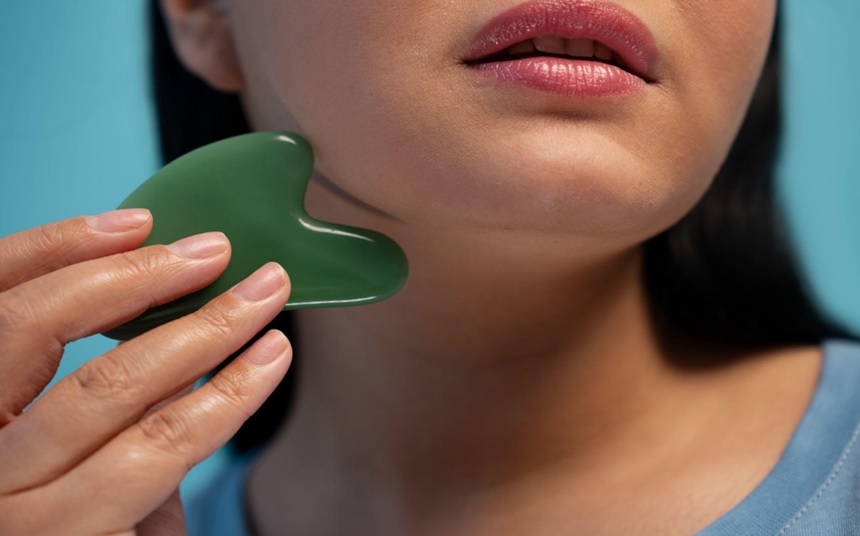
What to Remember Before Your Next Gua Sha Session
- Facial tension can develop through repeated movements, stress and habits such as clenching the jaw.
- Gua sha uses controlled strokes with a smooth-edged tool to massage the face and support a relaxing treatment experience.
- A gua sha face lift may help reduce the appearance of mild puffiness, but it cannot guarantee permanent changes to facial contours.
- The right pressure and technique matter, particularly for people with sensitive or easily irritated skin.
- Persistent jaw pain, locking or difficulty opening the mouth should be assessed by a suitable healthcare professional rather than treated with facial massage alone.
Small Moments of Tension Can Leave a Mark on Your Face
The jaw and cheeks do more work throughout the day than many people realise. From speaking and chewing to reacting to stress, these areas remain active for hours. Some people also clench their teeth without noticing, particularly when concentrating or feeling tense. Over time, this can leave the face feeling tight or uncomfortable.
Facial massage offers a gentle way to care for these often-overlooked areas. One traditional technique is gua sha, which uses a smooth-edged tool to apply controlled strokes across the skin. It is commonly associated with improved circulation, reduced puffiness and a more relaxed appearance.
A gua sha facelift is not the same as a surgical procedure. Instead, it refers to facial massage techniques intended to support a refreshed, more defined look. For those interested in this approach, gua sha massage in Singapore offers a way to experience traditional techniques in a dedicated wellness setting.
Understanding how facial massage works can help people decide whether it suits their skincare and relaxation needs.
What Causes Tension Around the Jaw and Cheeks?
The jaw and cheek muscles are involved in many everyday movements. Chewing, talking and facial expressions all rely on them. When these muscles remain tense for long periods, the face may feel tired or tight.
Stress can also affect how people hold their jaws. Some clench their teeth while working, driving or sleeping. Others press their lips together or tighten their cheeks when concentrating. These habits may go unnoticed until discomfort develops.
There are also other possible causes of jaw discomfort, including dental problems and temporomandibular joint disorders. Facial massage may help with general relaxation, but it should not replace a dental or medical assessment when pain is persistent, severe or linked to restricted jaw movement.
The cheeks can also appear puffy after poor sleep, changes in fluid balance or a salty meal. This is not always caused by muscle tension. However, gentle massage may help some people feel more relaxed and temporarily reduce the appearance of mild puffiness.
Recognising the difference between ordinary facial tightness and ongoing discomfort is important. It helps people choose suitable care rather than relying on massage to address a problem that may need professional attention.
How Does a Gua Sha Face Lift Work?
Gua sha is a traditional technique that involves moving a smooth-edged tool across the skin with controlled pressure. In a facial treatment, the movements are adapted for the delicate areas of the face. The therapist may work along the cheeks, jawline and other facial contours.
The tool should glide rather than drag across the skin. A suitable serum or other product helps reduce friction, while the pressure and direction of each stroke are adjusted to the treatment area.
The technique is often associated with circulation and lymphatic flow. Gentle massage may also help release the sensation of tightness and create a calming experience. However, claims about permanent lifting, collagen production, or major changes to facial structure should be treated with care. Research into facial gua sha remains limited, so its longer-term effects are not yet firmly established.
A gua sha face lift is therefore better viewed as a non-invasive facial wellness treatment than a substitute for medical or surgical procedures. Any visible changes are likely to be subtle and may vary between individuals.
Can Gua Sha Massage in Singapore Help Relax the Face?
A carefully performed facial massage can make relaxation the main focus of a treatment. Slow, controlled movements may help ease the feeling of tightness around the cheeks and jaw, particularly when that sensation is linked to everyday stress or muscle tension.
The experience also gives people time to pause. A calm treatment environment, gentle touch and steady movements can make facial care feel less like another task and more like a period of rest.
At Glow Haven Aesthetics and Wellness, the Gua Sha Facial service includes the Glow Wellness V-Lift Guasha Intensive Therapy Face. The treatment uses facial gua sha techniques to support contouring, circulation and muscle relaxation. The process includes cleansing, serum application, controlled scraping movements and a soothing mask.
The studio also offers an eye-focused gua sha treatment that targets the delicate area around the eyes. This is a separate service from the facial treatment and has a different focus.
When considering gua sha massage in Singapore, it is worth asking how the treatment is adapted to individual skin conditions and comfort levels. A suitable therapist should adjust the pressure rather than use force to create a stronger sensation.
What Should You Consider Before Booking a Facial Massage?
Although facial gua sha is generally performed with gentle movements, it may not suit everyone at every time. Skin that is inflamed, broken or infected may need to recover before massage. People with active acne lesions, a recent facial procedure, a bleeding disorder or a tendency to bruise easily should seek professional advice before treatment.
Excessive pressure can irritate the skin and cause bruising. Some people may also experience temporary redness or sensitivity. These risks make technique and hygiene important considerations.
It is also useful to discuss any jaw pain before a session. Massage may provide a relaxing experience, but it cannot diagnose or treat the underlying cause of persistent jaw problems. A dentist or healthcare professional can assess symptoms such as clicking with pain, locking or difficulty opening the mouth.
Expectations matter too. A gua sha facelift may leave the face looking temporarily refreshed, especially if mild puffiness is reduced. However, it cannot guarantee lasting changes to facial shape or skin firmness. Results vary, and current evidence does not establish that facial gua sha produces permanent lifting.
Give Your Jaw and Cheeks a Gentler Kind of Care
Facial tension can build quietly through daily habits, stress and repeated muscle movements. A gentle massage offers an opportunity to relax these areas while supporting a broader skincare routine. Gua sha adds a traditional technique that combines controlled movements with a calm treatment experience.
For those considering a gua sha facelift, it helps to focus on comfort, realistic expectations and suitable technique rather than dramatic changes in appearance. Choosing a treatment that respects individual skin needs can make the experience more enjoyable.
Contact us at Glow Haven Aesthetics and Wellness to learn more about our Gua Sha Facial treatments and discuss whether gua sha massage in Singapore is suitable for your facial care and relaxation needs.
